

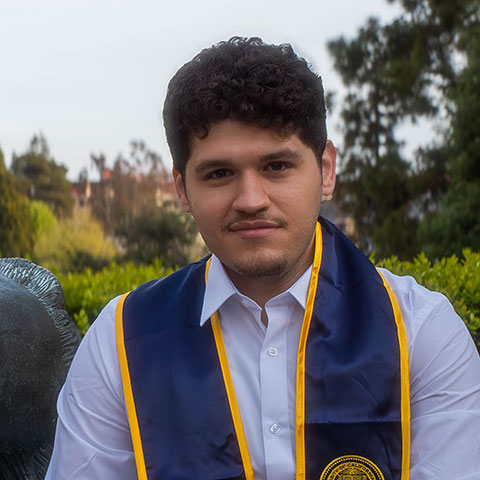

Undergraduate Researcher at the University of California, Berkeley.
I loved the strong sense of belonging the STEM Program gave me. Some of my favorite memories come from being a peer tutor and helping students gain confidence in STEM, it reminded me how powerful mentorship can be. Being part of such a supportive community helped me grow both personally and academically.
The SMC STEM counselors and Transfer Center were crucial during my transition to UC Berkeley. They helped me plan every detail and gave me the confidence to believe I could succeed at a top university. That support made all the difference.
What I enjoy most about being in biology or specifically evolutionary biology is how it helps make sense of the living world. It’s exciting to explore how organisms adapt and change over time. The field constantly challenges me to think critically and ask deeper questions.
To any aspiring biologist or medical researcher: keep asking questions and don’t be afraid to get things wrong. Growth in science comes from persistence and curiosity, not perfection.
One of my best STEM hacks is teaching what you learn, it forces you to truly understand the material.
If I could go back, I’d tell myself not to be afraid to reach out or apply for something that feels out of reach. So much of success is just showing up and trying, even when you're unsure.
Outside of STEM, I enjoy photography. Capturing moments through a lens helps me slow down, notice details, and express creativity in a completely different way. It’s a great balance to the analytical side of science.