



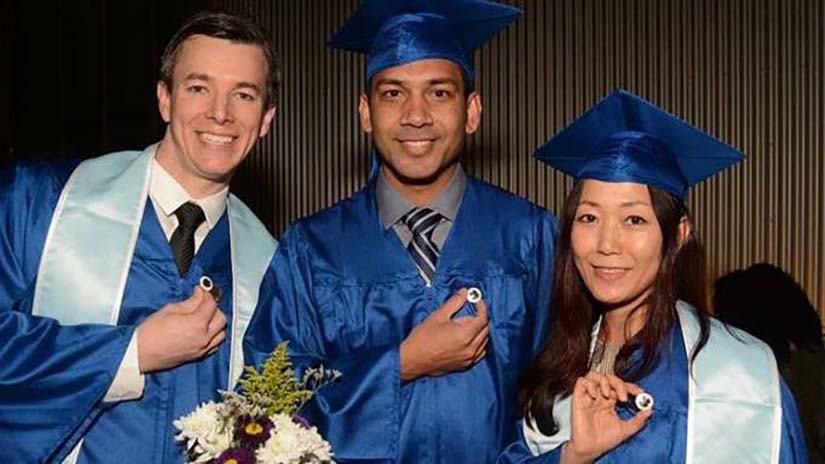
Patricia Kusaba with colleagues at the Compassion Journey event in Torrance
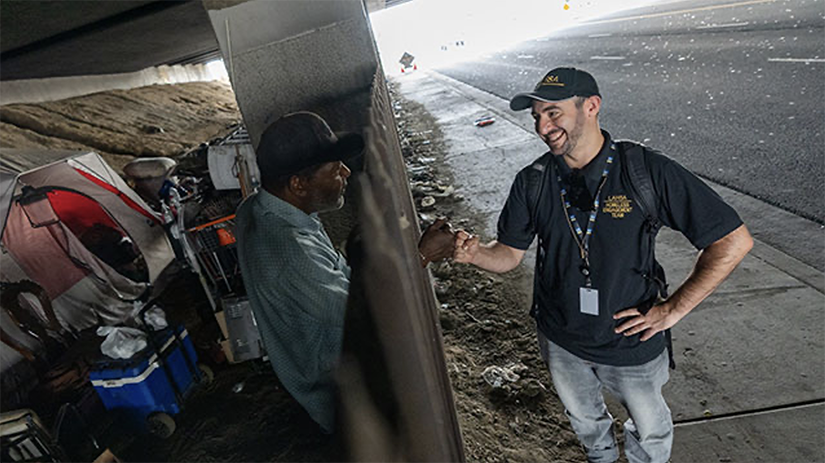
A frontline homeless services worker in action
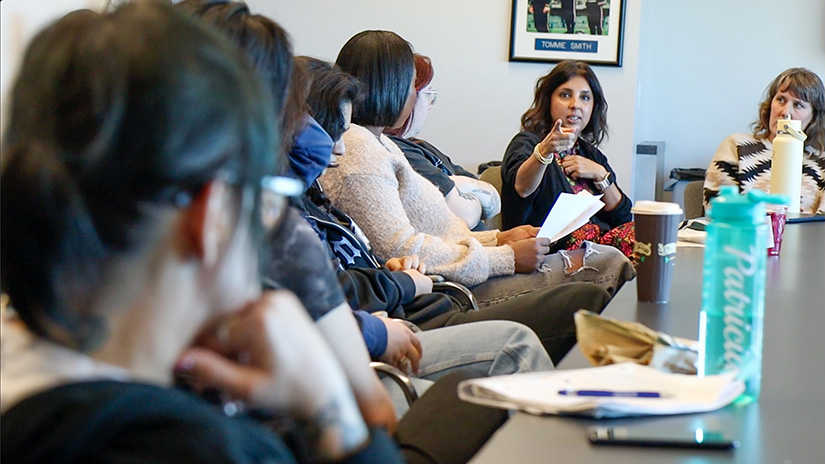
Homeless Services Certificate students in the classroom
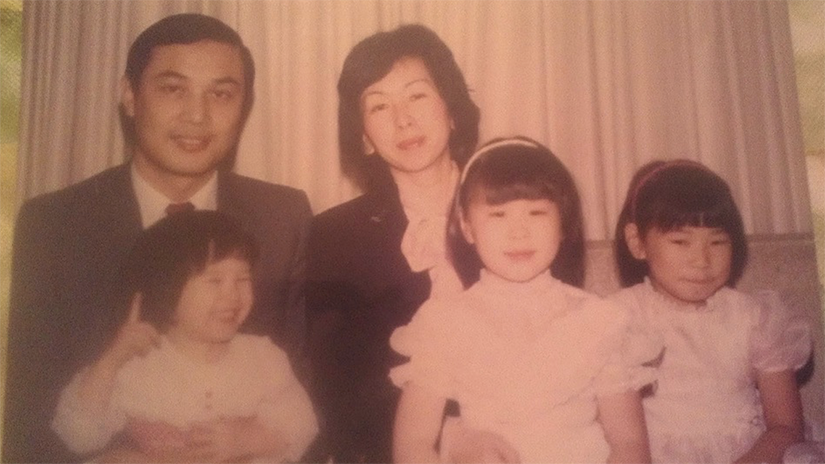
Patricia (far left) with her family

Patricia with her best friend Nugget

Patricia and her fiancé Richard on their first date
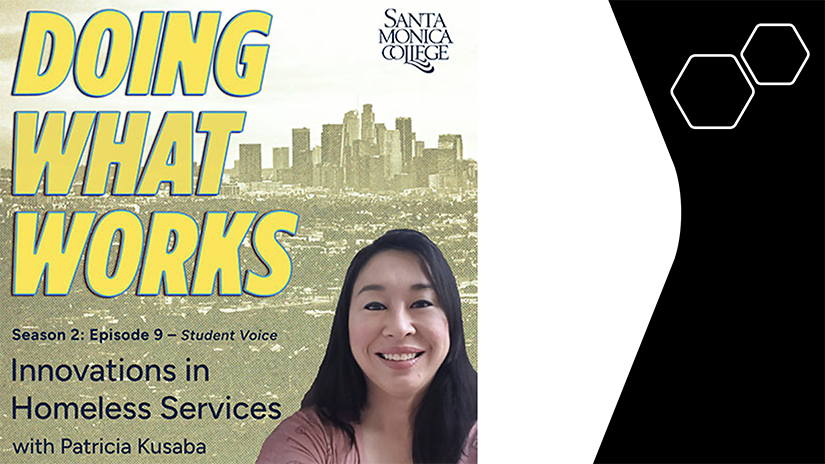
Patricia featured on the Doing What Works podcast

Patricia Kusaba knows how easily stability can unravel — and how hard it can be to ask for help when it does. One of the first graduates of Santa Monica College’s groundbreaking Homeless Service Work certificate program, she overcame mental health challenges and a loss of housing to aid others in navigating their own paths back to stability.
But then for much of her life, Patricia was a person others relied on. She studied literature, earned a teaching credential, and worked in the automotive and technology sectors of Silicon Valley. On the surface, her life reflected responsibility and momentum. Less visible was how fragile that stability could be, or how homelessness can exist quietly, even for people who appear functional and self-sufficient.
A Life Overturned
During the COVID-19 pandemic, Patricia experienced a period of housing instability that forced her to live in her car. Only her pet dog, Nugget, was there to comfort her during those harsh times. “That dog,” she says, “was my best friend.”
Looking back, Patricia describes those days as a turning point that led back to school and toward serving others. She was part of the first cohort to earn SMC’s new certificate in homeless service work.
“I didn’t even know working in the homeless sector was a career option,” Patricia says. “It wasn’t something I saw growing up—but once I was introduced to it, I realized this is where I belong.”
Moving Around — and Ahead
Born in Chicago, Patricia moved frequently as a child as her father worked to establish a Buddhist organization, SGI. Amid the upheaval, education was a constant. Many of those who shaped her life were educators, mentors and speakers who believed deeply in the power of words to change lives. So teaching felt like a natural fit.
She earned her undergraduate degree in English from UC Berkeley and later completed a teaching credential at Cal State Long Beach. She also studied at Penn State, finishing the coursework for a graduate program before changing direction.
But high pressure, long hours and health challenges took their toll. When the pandemic struck, isolation and instability compounded those challenges. Patricia describes this period as one she did not fully understand until she emerged from it. With the support of her fiancé, Richard Carballo, the right medical care and mental health services, she regained her footing.
Then a community health worker recognized that Patricia’s lived experience and empathy could become strengths. She urged Patricia to apply for SMC’s Homeless Service Work certificate.
Back to School
Still, Patricia was nervous about entering the program. It had been years since she had been a student, and she worried she would not fit in. Instead, she found a learning environment defined by respect, credibility and compassion.
“The professors had real experience in the field,” she says. “They were professional but down to earth. That made a huge difference. I felt safe learning again.”
SMC’s Homeless Service Work curriculum prepares students to work in the homeless response system by combining classroom instruction with hands-on field experience. Students learn how funding flows through the system, how services are coordinated and how trust is built one relationship at a time. Just as important, they learn how to care for themselves while caring for others.
For Patricia, one assignment in particular stood out. As part of a final project, students were asked to gather and organize resources related to homelessness. While others completed the task and moved on, Patricia discovered something deeper.
“I realized how much I loved it,” she says. “Researching resources, organizing them, making them easier to access — it felt meaningful. Like something I could do every day and really help people.”
Hope Toolkit
That realization sparked Patricia’s creation of Hope Toolkit, an online resource to help people navigate housing, health and social services. Built initially from thousands of pages Patricia collected and vetted herself, the site reflects her belief that access to information should not require insider knowledge or persistence bordering on desperation.
“There’s a resource gap in society,” she says. “People shouldn’t have to beg for help or feel ashamed for needing it.”
Hope Toolkit is one way that Patricia translates her education and lived experience into tangible impact. Another is her continued involvement in the community. She interned at The People Concern as part of her studies and now volunteers with Housing Works, Harbor Interfaith and SHARE!, an organization that provides recovery support and same-day housing.
She is also involved with grassroots housing advocacy through RUN L.A., a coalition that advances housing initiatives and supports the passage of legislation in California. Through these connections, Patricia continues to build the networks she encountered through SMC.
“The value of the program is learning from experts and meeting people who are actually making decisions,” she says. “Networking and mentorship open doors to real change.”
Small Acts Matter
While the toolkit is a big project, Patricia believes that small gestures matter as well. “When you ignore someone who is homeless, you are ignoring your own humanity,” she says. “You don’t need to give money. Smiles are currency. Kindness reminds people of their humanity.”
She encourages others to start by doing whatever they can, whether volunteering for an hour a month, offering water or simply acknowledging someone who is often unseen. These moments, she says, can change how people see the world and their place in it.
Through the Homeless Service Work certificate program, Patricia learned that effective support depends on communication, trust and teamwork. Systems matter, but relationships make them work. Everyone brings something valuable shaped by their own experiences.
“All of us have something to contribute,” she says. “What matters is how we treat each other.”
* * *
SMC in Focus Volume XII, Issue 1
Hope for the Unhoused
An assignment in SMC’s Homeless Service Work certificate program led Patricia Kusaba to launch an online toolkit to help people in need. Read Article

Frontline Responder
From award-winning journalist to first point of contact at the SMC Police Department, Erin O’Neill brings empathy and creativity to a vital role. Read Article
Woodshop Until He Drops
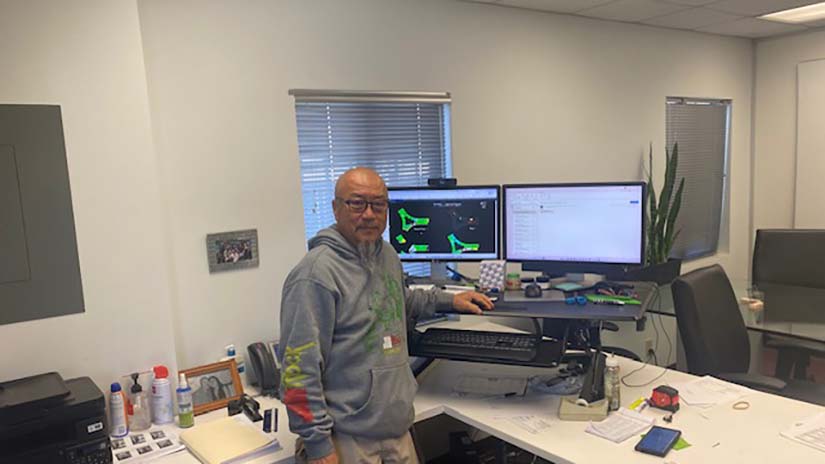
Meet Terry Kamibayashi, Santa Monica College’s reggae-loving, easy-going director of facilities maintenance. Read Article
Solo & Ensemble
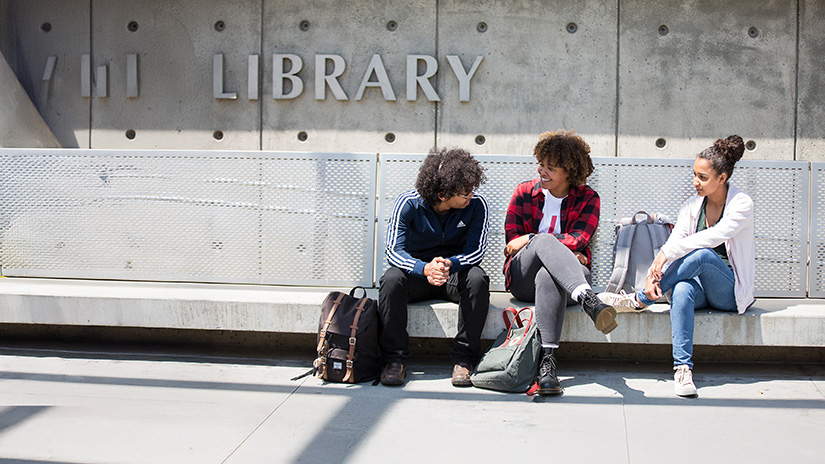
SMC redefines the library experience to support both personal study and group collaboration. With a $1 million renovation, the award-winning 96,000 sq.ft. space has been reimagined. Read Article
Bragging Rights
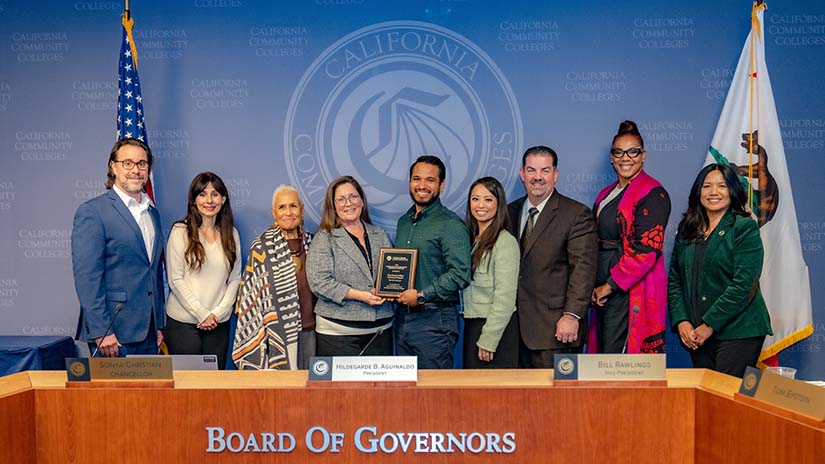
The Architecture program recognized as an Exemplary Program. A counseling instructor appointed to statewide FACCC Board of Governors. A sociology prof interviewed on a popular Apple crime podcast. Read Article
#2016 Era SMC in Focus: A Look Back
SMC in Focus does a #2016Era throwback. Ten stories—Nursing’s 50-year anniversary, Emeritus, Promo Pathway, SMC students at NASA/JPL, & more—celebrate SMC’s excellence: past, present & future. Read Article