

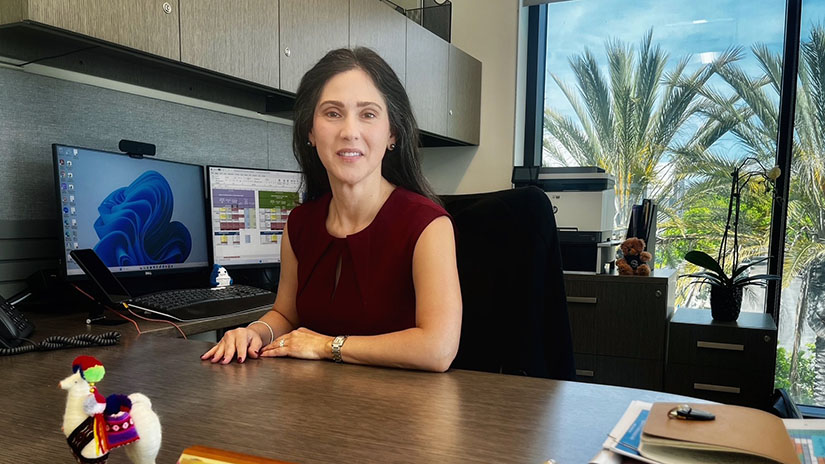
In her office
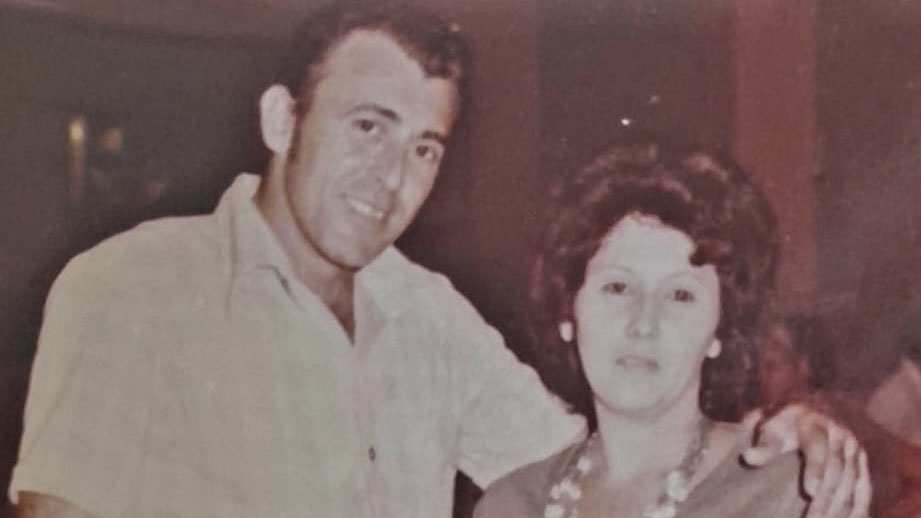
Tania's parents, mom (Tania Acosta) and dad (Higinio Acosta), circa 1980
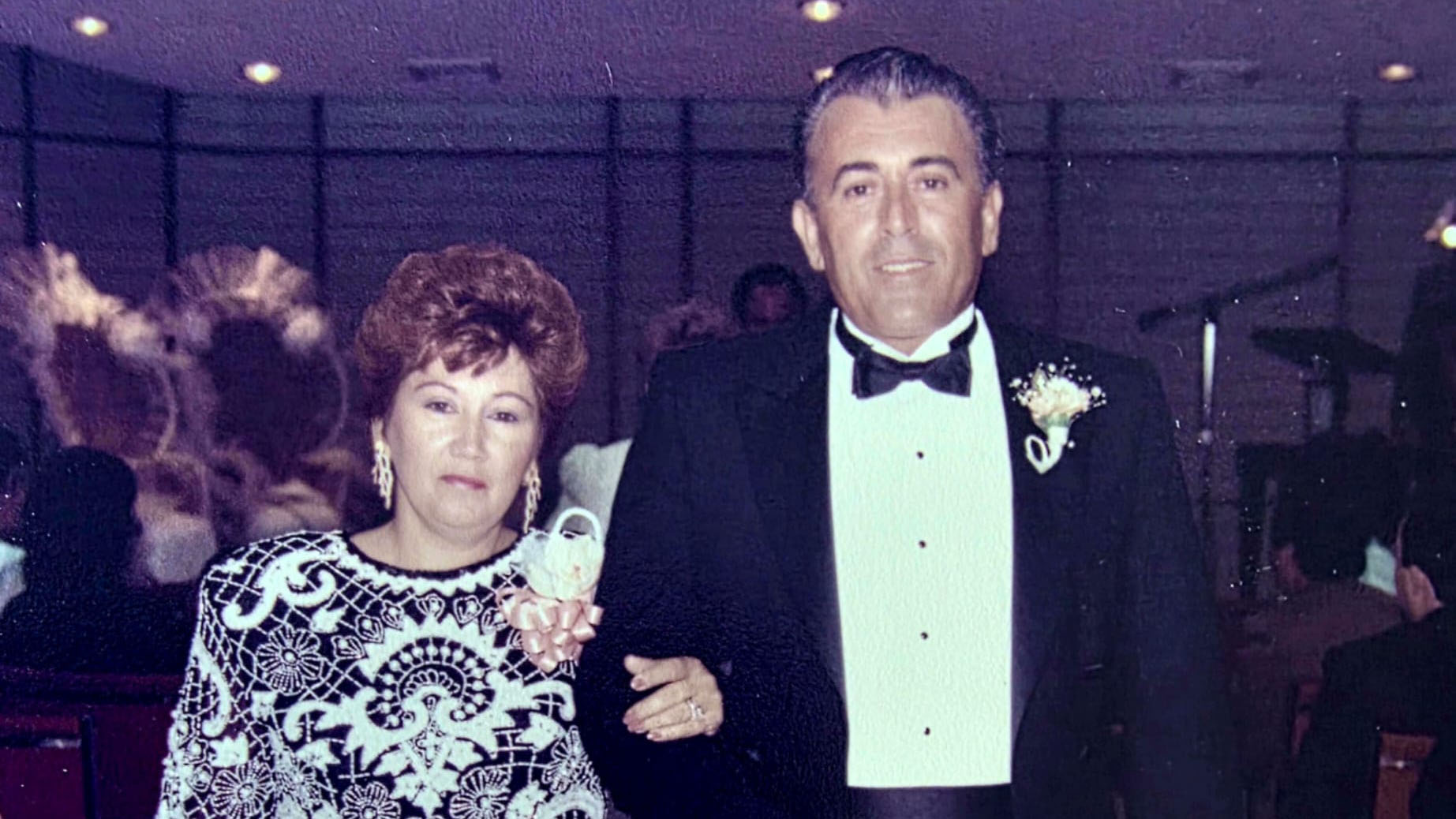
Tania's parents at her sister's wedding, circa 1991
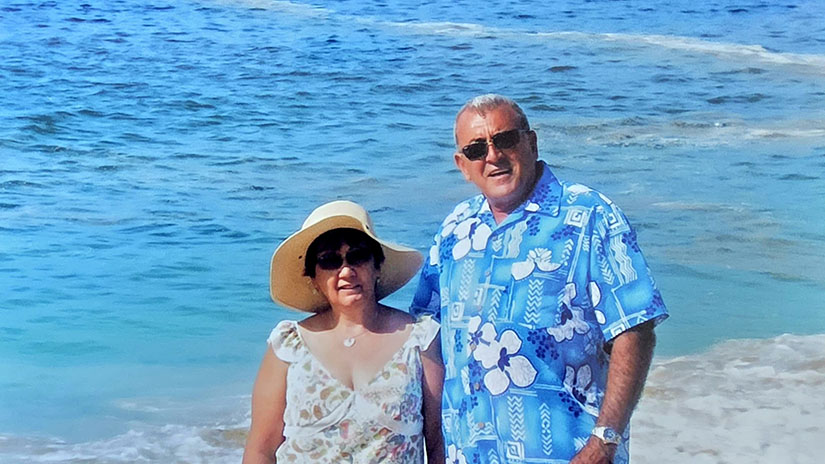
Tania's parents vacationing in 2007
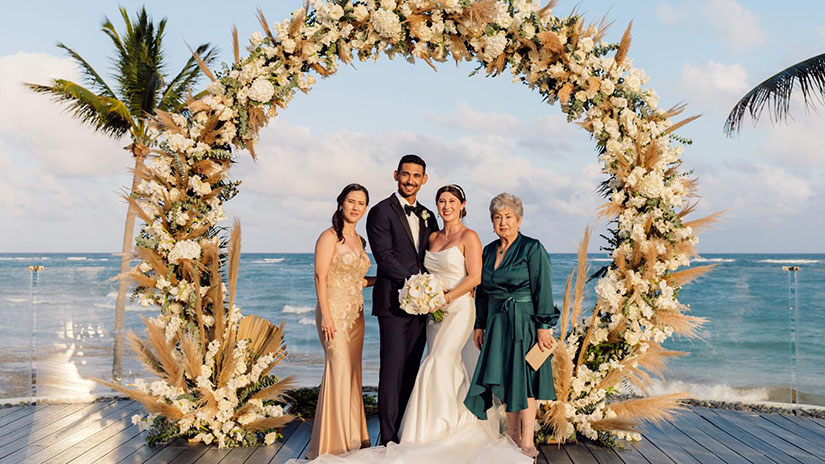
Tania & her mom at her daughter Melanie's wedding, with son-in-law Julio Rodriguez, circa 2023
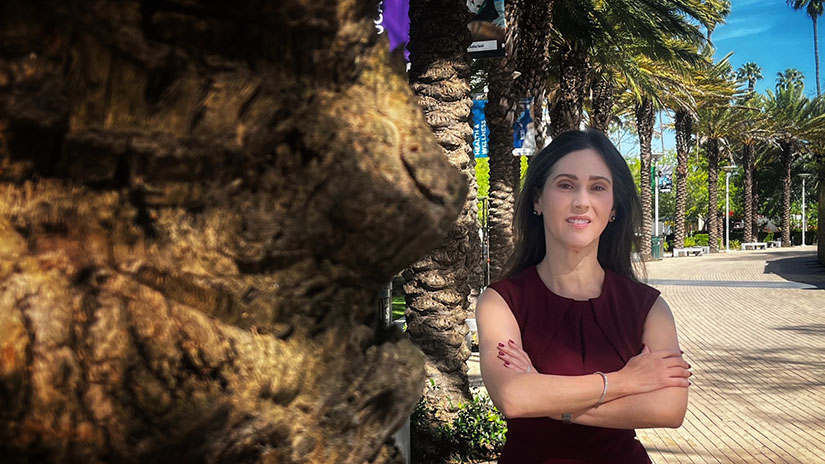
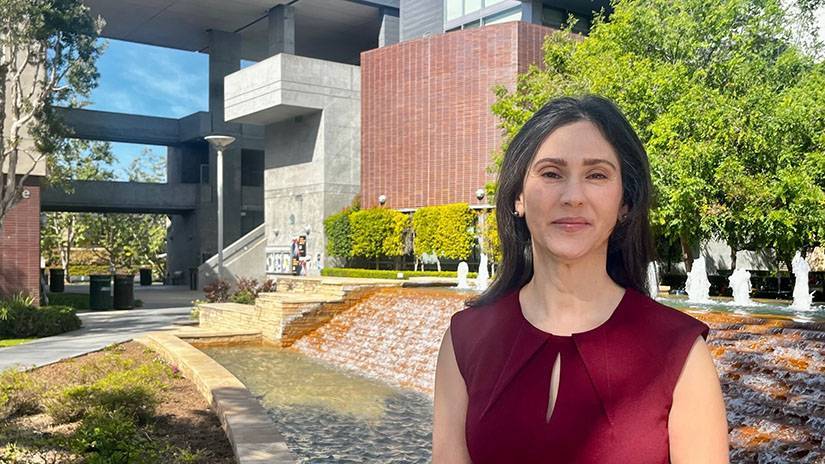
On the Main Campus Quad

Imagine being a five-year-old, growing up amid great economic adversity—not realizing till much, much later just how dire things were—because your parents do their best to insulate you from poverty, from hunger, from uncertainty. Your father, a sous chef, takes the family to the Havana restaurant where he works, just before closing time—to dine on what was going to be tossed because there isn’t enough food at home. Imagine fleeing the country—leaving behind everything you have known—on a boat with other refugees, the first time you’ve been away from home. Imagine being seasick and hungry, stranded off the coast, “for what seemed like days.” (Twenty hours can seem interminable to a child). Imagine arriving at the home of an uncle you’ve never met. Imagine this same uncle taking you to a grocery store and showing you an apple.
“Would you like one?” he says.
“No,” you say. “I don’t really like tomatoes.” (Because you’ve never seen an apple before).
Imagine all this, and you might have a sliver of an understanding, of what it is like
to be Tania Acosta, Ed.D., the eldest daughter of Cuban immigrants determined to give her and her sisters a
better life. The first in her family to graduate from high school and college, Tania,
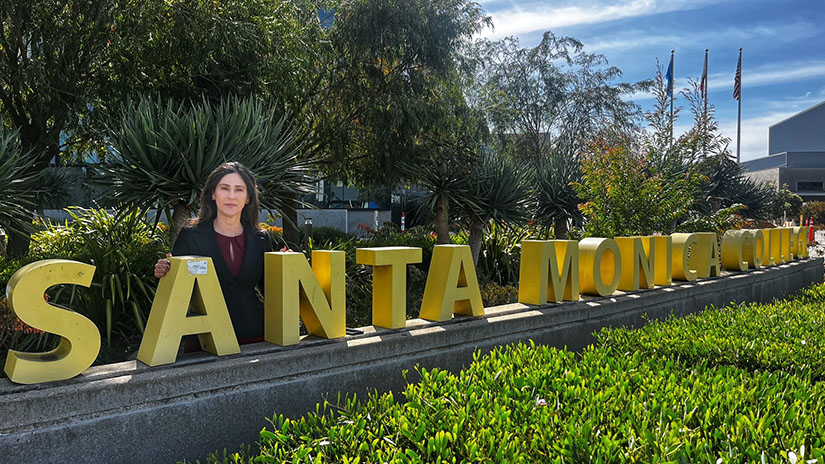
Santa Monica College’s new(ish) Vice President of Student Success—a position formed after a reorganization that merged areas previously under two now-retired
vice presidents—was appointed SMC’s chief student services officer in December 2025, after a nationwide search. She came from Florida—home for most of her life—and Miami Dade College, where she’d racked up over 24 years of leadership and classroom experience, in roles
such as interim campus president, dean of student services, director of campus administration,
and adjunct faculty, to name a few.
Miami Dade College—the “largest institution of higher education in the country”—is, like SMC, a Hispanic-Serving Institution, and Tania makes it clear she is bringing herself and the sum of her experiences
(but not Miami Dade College itself) into her new role.
The editor of SMC in Focus talked to Tania about how her childhood influenced her career trajectory, how she
stays centered in tough times, career highlights she’s particularly proud of, and
then some.
This interview has been condensed and lightly edited for brevity and clarity.
SMC in Focus: You are a first-generation high school and college graduate. How did that experience influence your trajectory?
Tania Acosta: I specifically have two examples of turning points my parents provided for me: the first one was my father, who made the decision to emigrate in 1980 from Cuba to the United States. My mother wasn’t sold on the idea. But he convinced her that this was the right move for us, that we—I’m the oldest of three daughters—needed to have a better future. I credit my father for bringing me to the U.S., and I credit my mother for finding my career path.
My father didn’t finish middle school, and my mother started high school but had to drop out when my grandfather passed—when she was in the tenth grade. For people who had such limited education, they really prioritized it for us, constantly reinforcing: You’re all going to college. You have to excel. You have to have a better life.
When I was college age, I was very shy—I’m naturally an introvert. My mother took me to meet with a counselor. Everything goes great, but then my mother says to her: “You know, she needs a job. Is there work for her here?” And I’m beyond embarrassed—I’m mortified! To my surprise, the counselor said I qualified for work study, and that there were two openings—one in the library and one in the president’s office. And my mother jumped in and said, “Oh, she’ll take the one in the president’s office.”
I never looked back. That was it. I was 17 years old, went straight into a higher education position, and never left.
SMC in Focus: After your family emigrated to the U.S., did you remain in Florida?
Tania Acosta: My father was having a really hard time getting a job and getting acclimated; we were living in my aunt and uncle’s home, and it wasn’t working. We relocated to Nevada—my father had an old friend there, who was doing well—and lived there for two years. My father worked in a car wash, my mother worked in one of the hotels as a maid.
[Around that time], I started first grade. They were still not comfortable, missing home—there was the language barrier. I spent years being my parents’ professional translator—speaking with landlords and in doctor’s offices, supermarkets, you name it.
They couldn’t find their footing—it’s very difficult when you come from another culture, not just the language, it was [also] the education barrier; there’s more community for Cuban Americans in Florida, obviously—and we moved back to Florida, where I remained until recently. We had housing instability, definitely food insecurity.
SMC in Focus: Miami Dade College to Santa Monica College—a big change, geographically and otherwise. What initially attracted you to SMC?
Tania Acosta: I have family in the state as well as friends and colleagues I’ve worked with through different professional associations and conferences, so I always had a high level of comfort and affinity with California in general. When I first heard about SMC, I was impressed with its age—the longevity, for me, meant stability. It meant a high level of community engagement, it meant strategy. This doesn’t happen by coincidence.
Then I saw that SMC was a Hispanic-Serving Institution—it had the population of students I was not only familiar with but passionate about. Also: award-winning faculty, numerous accolades, including number one in transfers [to the University of California] for over three decades. And the amount of student support services. That’s what put SMC on my radar, and as I started spending more time in the state, the college’s name repeatedly came up: Santa Monica College does this—or they’re very known for that.
When the position was posted, it seemed like a no-brainer. I visited the campus before applying. I walked around, spoke to a few students—just to get a feel. And I really loved [this] place—I realized it was a tightknit community.
SMC in Focus: At Miami Dade College, you worked as an adjunct faculty member and as an administrator. How did your experience in the classroom inform your experience as an administrator, and vice versa?
Tania Acosta: Originally, I was the director of campus administration, and when I finished my doctoral degree, I wanted to switch over to student services, because I’d already been spending years on the fringe, and I really enjoyed that work.
I figured I needed to be more in tune with our students, to help me understand their needs and how best to support them. The student of today is not what we were. Drawing conclusions—or simply conducting focus groups—isn't going to be enough.
I taught Principles of Business—a blended class (in-person some days, hybrid on others)—during the summers. I quickly found that I loved the work. As an administrator, I’m only known in one role and mainly by employees. But as a faculty member, it’s the complete opposite. You step outside of a classroom, and everyone stops you: Hi, Professor So-and-so. And when they cross the stage at graduation, there is a real sense of pride. They know you. They embrace you. As an administrator, I supported students by navigating policies and procedures and helping them achieve goals while removing barriers. But as a faculty member, I could connect on a more personal level, a unique level. One that permits me to truly know their stories. It also allowed me to build a deeper understanding of and stronger rapport with my faculty colleagues.
SMC in Focus: Your last position as a dean of student services at Miami Dade College’s Homestead Campus, it seems to have been a very unique campus. One thing that stood out was a program you oversaw called CAMP. Tell us about some things you accomplished there that you are particularly proud of.
Tania Acosta: CAMP—the College Assisted Migrant Program—was grant-funded by the Office of Migrant Education. I oversaw the grant for eight years. It’s a very unique program because there are only two in the state of Florida, serving and empowering students from farmworker families. That is very dear to me, with my own personal experience, because these students don’t know what it’s like to have anyone walk them through [higher education]. An additional challenge was that they’re not stationary—their parents are seasonal workers, consistently picking up and moving.
I’m very proud of the work—we’d served almost 300 students by the time I left, collaborating with the Mexican American Council and the local high schools to recruit students. It included everything from intrusive advisement to fireside chats (camping trip), academic and career counseling, dedicated tutors, to mental health counseling and more. Once they finished the CAMP program, we transitioned them over to TRIO to ensure their continued success
I had the privilege of overseeing five total grants [overall] that [each] had a transition point for the students, which I, as a big sports fan, nicknamed “The Handoff Model”, after watching an Olympic track relay. My team and I built a pipeline—starting with just one program, Upward Bound, working with Latinx and Black students at a local high school. From there, we added a STEM grant incorporating dual-enrolled students, and supporting undergraduate research. We then expanded with CAMP, added funding to support disabled student services and rounded it out with TRIO. It was a framework of support and continuity for students across multiple pathways.
SMC in Focus: The role that you have chosen can be a very challenging one. What keeps you centered is one, and what’s a favorite part of your job?
Tania Acosta: My father taught me early on that you can discard and replace things, but not people. It was a powerful lesson early on in childhood. What I’ve noticed that helps in any leadership role is civility—it’s not [just] about being kind or polite, it’s about being able to have conversations with someone in a neutral setting without dehumanizing the other person. Putting yourself in their shoes so that you can reach a consensus.
When I was doing campus administration, I was the disciplinarian, not doing the “fun stuff.” I said, I want to be the one that gives students awards and recognition for their work. For so many years in my career, I didn’t get to do that, the fun part. And then, of course, graduation is an awesome experience, to see students cross the stage.
SMC in Focus: What similarities do you see between Miami Dade College and SMC, other than the fact that both are Hispanic-Serving Institutions?
Tania Acosta: Another similarity I see—something SMC just received—is the Black-Serving Institution designation. That is huge. It shows all the intentionality—I see the similarity to some of the work I was doing at my previous institution. We had a Rising Scholars program—serving first-generation Black students—and we developed everything from a support group that does advising in the early phases, financial aid, a tutoring component, specific programming, social/cultural activities, and more. So, I was very pleased when SMC received the BSI designation.
Miami Dade is not Santa Monica, and Santa Monica is not Miami Dade. I’m not trying to bring Miami Dade to Santa Monica. I’m bringing me—and my experiences—to model some of what I’ve been able to create, but with the Santa Monica flare.
SMC in Focus: You began in this role at a time of immense flux for higher education, for California Community Colleges, and for SMC. Is there a principle or a personal practice that centers you in challenging times?
Tania Acosta: At different times, either personally or professionally, we all go through challenging situations—[and] a lot of times, people make note of mentors. I’ve been very fortunate to have had great mentors . . . [but] I think we have to also prioritize and give due justice to the “informal” mentors in our lives. Those—they can range from colleagues to family members—are the ones that keep me centered. You don’t have to share all the information with these individuals, but they’re the ones who know you best. When you’re going through anything that’s difficult, they’re the ones who can walk you through your feelings. If it’s 2:00 in the morning, who is there for you, right?
These personal relationships . . . keep me grounded.
SMC in Focus: How do you maintain that work-life balance?
Tania Acosta: Once I leave the office, after I get home, [I] eat something. I’m always hungry! I blame it on my upbringing and food insecurity—it caught up with me. I never miss a meal these days! Meal breaks work really well for me.
Also, just space, nature, a walk, even just walking across campus or going down to Pico Boulevard. It helps create a bit of balance through the day. I [also] like my Peloton, I like riding—and have been exploring the city on my e-bike. And when all else fails, tell you what works for me: shopping.
SMC in Focus: What aspect of your role at the college have you enjoyed the most so far? What opportunities do you see for growth, specifically as it relates to your portfolio of student services/success?
Tania Acosta: When you are in the middle of hard times, you can’t see beyond a certain point. But once you sit down and [things] settle, you’re able to get extremely creative and innovative. And you see how tenacious and resourceful we truly are. And then as we go through [difficult times], we’ll be able to, I think, build stronger connections within ourselves, our constituents, our students, the families we serve, everyone in general. I think we’re going to see that on the other side. It’s already an extremely close and tightknit community—which is what drew me here and what I’ve enjoyed the most so far –especially our students, who remain at the heart of our purpose.
SMC in Focus: Before we transition to the “fun” part of the interview, just one follow-up question about your background—you were the oldest of three daughters, and the first one in the family to graduate from high school and college. How did your trajectory and your accomplishments influence your siblings?
Tania Acosta: It’s always harder when you’re the first one out. You’re the guinea pig in the family. Everybody takes a different path based on what they like to do and life circumstances, but you definitely have a responsibility when you’re the oldest, to make sure that you’re carrying the baton.
I set an example, not only for [my] siblings, but I like to think I was a good example for my own child as well. I used to remind her all the time when she was younger, You don’t know how lucky you are, to have someone who’s in higher ed!
SMC in Focus: We’re going to transition to some more lighthearted questions. . . you ready? Tell us a fun fact that most may not know about you.
Tania Acosta: I’m afraid of frogs. Terrified. Can’t even walk near them. If I hear them, no . . . no frogs!
SMC in Focus: Is there a technique you use to structure your day? For productivity or otherwise.
Tania Acosta: There’s a routine at the end of the day—a to-do list, and I have papers structured in the order that I’m going to tackle things the next day. I know, it’s nerdy.
SMC in Focus: Describe your ideal weekend.
Tania Acosta: Oh, traveling. I love to travel, to see new sights, and to try new experiences. And there’s got to be good food.
SMC in Focus: Favorite destination, favorite food?
Tania Acosta: Mexico. I’ve been lucky enough to visit Mexico many times – Cancun, Isla Mujeres, Cabo San Lucas, Mexico City, and every trip has been absolutely amazing. Favorite food—guacamole, any day.
SMC in Focus: The last, best thing you watched or read.
Tania Acosta: “Navigating Ambiguity” written by Andrea Small and Kelly Schmutte.
SMC in Focus: Three adjectives you’d use to describe yourself?
Tania Acosta: Civil. I’m analytical. And I like to think I’m resilient.
* * *
To read more about Tania Acosta’s professional background and accomplishments, check out this Dec. 3, 2025 press release.
***
SMC in Focus Volume XII, Issue 2
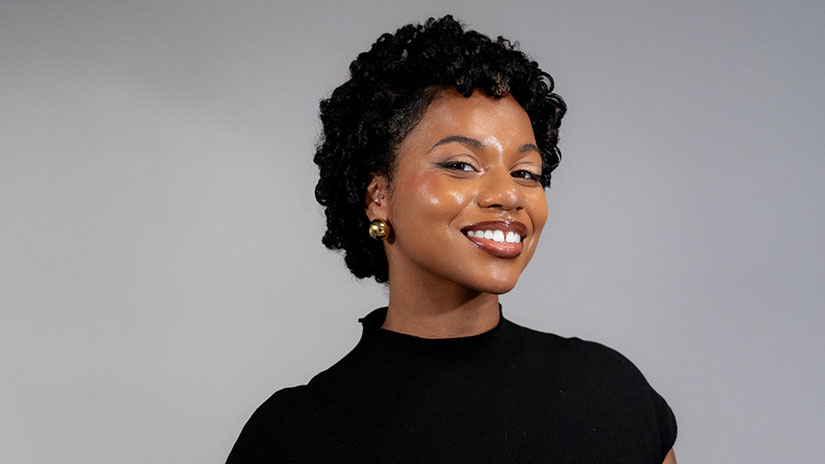
It Was Destiny
A chance encounter in a Sherman Oaks mall put graduating Interaction Design student Harmony Simpson back on track. Read Article
In her Shoes
The daughter of Cuban immigrants—and a first-gen high school & college graduate—SMC’s new(ish) VP of Student Success on resilience, her life’s turning points, and what keeps her centered. Read Article
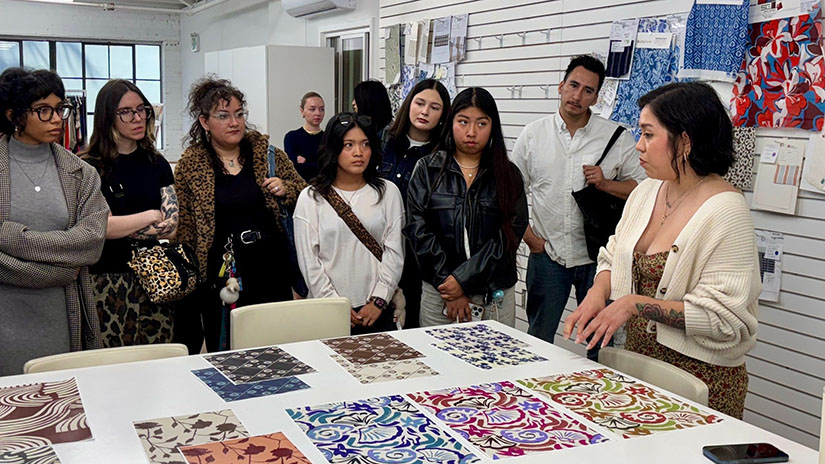
Fashioning Futures
Rails founder Jeff Abrams brings scholarship support and industry insights to SMC students as they pattern careers in fashion. Read Article
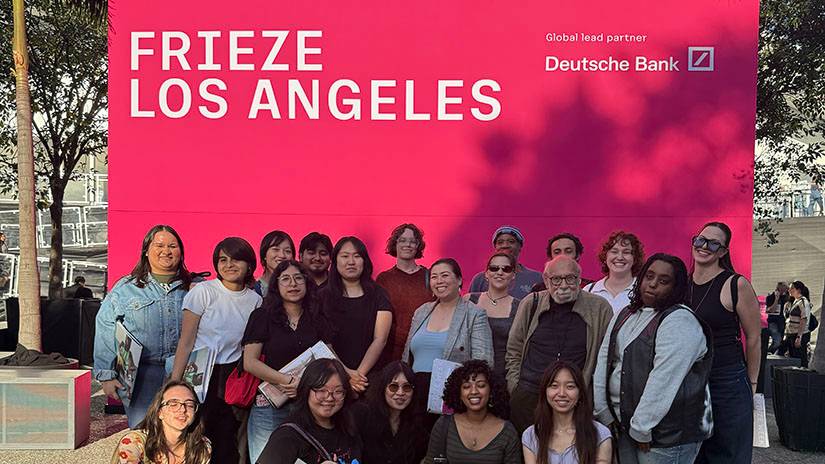
Frieze Frame
SMC showed up in force at Frieze Los Angeles, where 22 student interns engaged with top galleries and collectors, established artists (including four SMC alum) and 32,000 visitors at this world-class art fair. Read Article
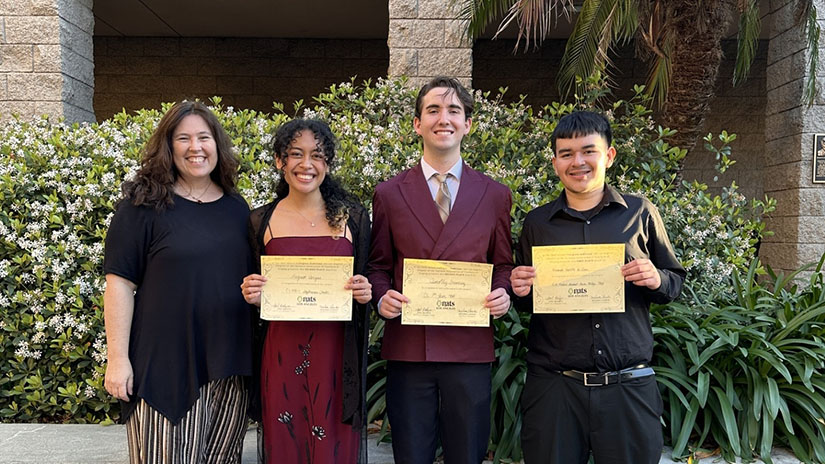
Bragging Rights
Applied classical voice students win top awards. IxD grads receive offers from the best schools. An aquaculture instructor dives deep into kelp conservation. Read Article

Lighting the Way
Santa Monica College widened the lens for Charles Butler, helping him go from modeling and background acting to success behind the scenes of hit reality shows. Read Article