


Accessing the Data
The station is publicly accessible through the Weather Underground dashboard, providing Gauges, History Graphs, and Table views for all users:
Station ID: KCASANTA5146
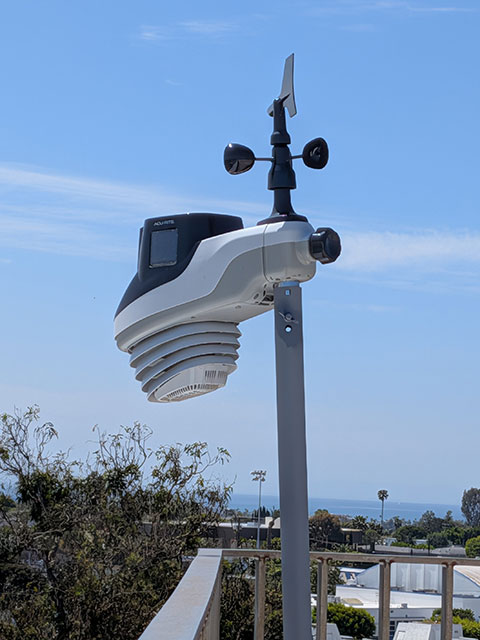
Santa Monica College’s weather station (KCASANTA5146) is a critical piece of scientific infrastructure managed by the Earth Science Department. By streaming live data to the Weather Underground platform, the station provides a high-resolution window into the unique coastal microclimate of the Santa Monica Bay, serving as a laboratory for students and a safety resource for the local community.
The station is located on the roof of the Math and Science building.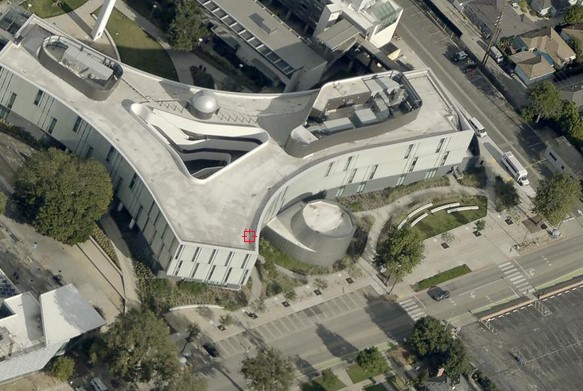
SMC Student Participation & Academic Integration
Students are active contributors to the data lifecycle, using the station to bridge the gap between theoretical meteorology and real-world application:
- Laboratory Observations: Students in Physical Geography, Meteorology and Biology can use the station for "live labs," analyzing campus-specific conditions to understand the relationship between atmospheric variables.
- Microclimate Research: By comparing SMC’s coastal data with inland stations, students visualize the "marine layer" effect and temperature gradients across the Los Angeles Basin.
- Geospatial (GIS) Applications: Students download historical data to create spatial models, mapping environmental variables to study issues like environmental justice and urban heat distribution.
- Climate Change Analysis: Students utilize the station’s long-term data archives to identify local shifts in weather patterns. By comparing current extremes, such as record-breaking heat days or unusual precipitation "atmospheric rivers", against historical norms, they gain a firsthand understanding of how global climate change manifests at a hyperlocal level.
Community Disaster Preparedness
The weather station acts as a "first responder" in terms of data, providing the community with vital information during high-risk environmental events. In a region prone to rapid changes, this data is critical for:
- Wildfire Monitoring: During Santa Ana wind events, the station provides real-time wind speed and gust direction data. Combined with low humidity readings, this information is essential for assessing fire ignition risks and potential spread patterns in the Santa Monica Mountains and surrounding urban-wild-land interfaces.
- Extreme Heatwave Mitigation: During heatwaves, the station tracks the "Urban Heat Island" effect. This helps local residents and city planners identify when temperatures reach dangerous thresholds, triggering the need for cooling centers and public health alerts.
- Storm and Flood Response: Granular rainfall rates allow the community to monitor the intensity of winter storms in real-time, providing early warnings for potential localized flooding or debris flows on coastal slopes.
Sustainable Farming at the SMC Organic Learning Garden
The weather station is a primary tool for supporting the SMC Organic Learning Garden, a campus hub for urban agriculture and sustainable food systems. The data allows student gardeners and faculty to practice precision agriculture:
- Water Conservation: By monitoring humidity and solar radiation, students can calculate evapotranspiration rates, ensuring the garden is watered only when necessary to prevent runoff and conserve the city’s water supply.
- Planting and Harvest Cycles: Real-time temperature monitoring helps students protect sensitive crops from occasional frost or extreme heat stress, allowing for a more resilient and productive learning garden.
- Soil Health & Micro-Biology: Students correlate weather data with soil moisture levels to understand how local atmospheric conditions affect the composting process and the biological health of the garden’s soil.