

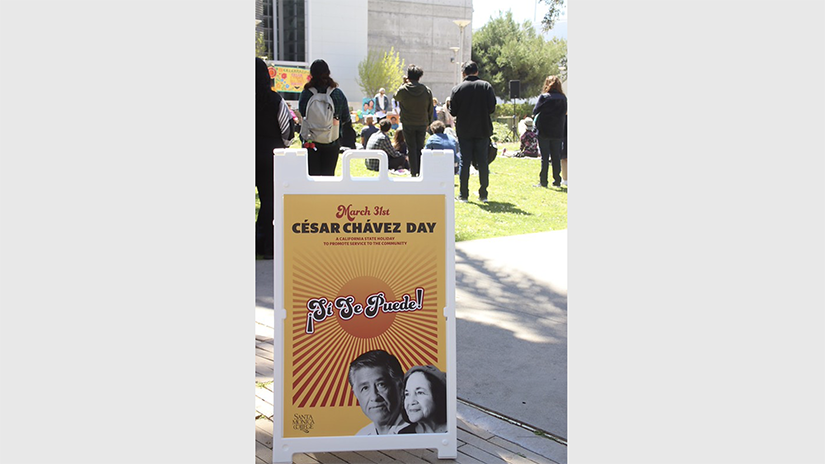
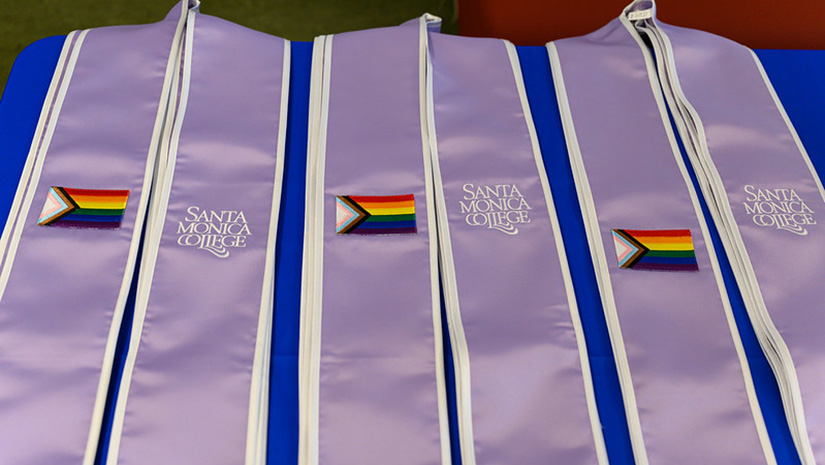
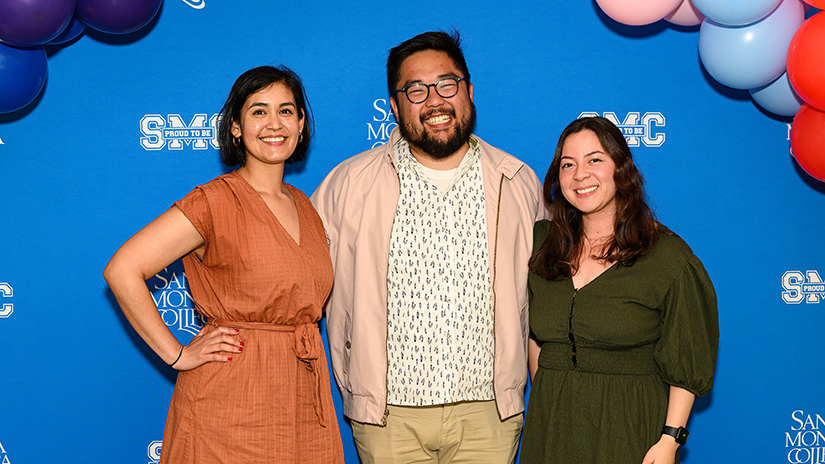
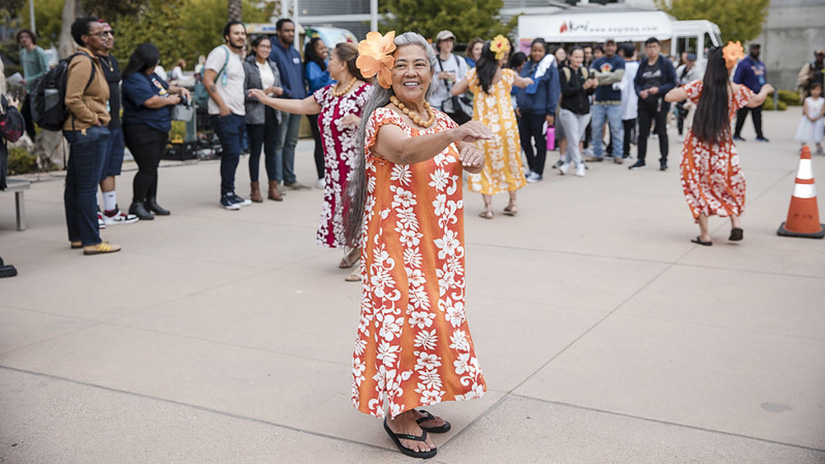
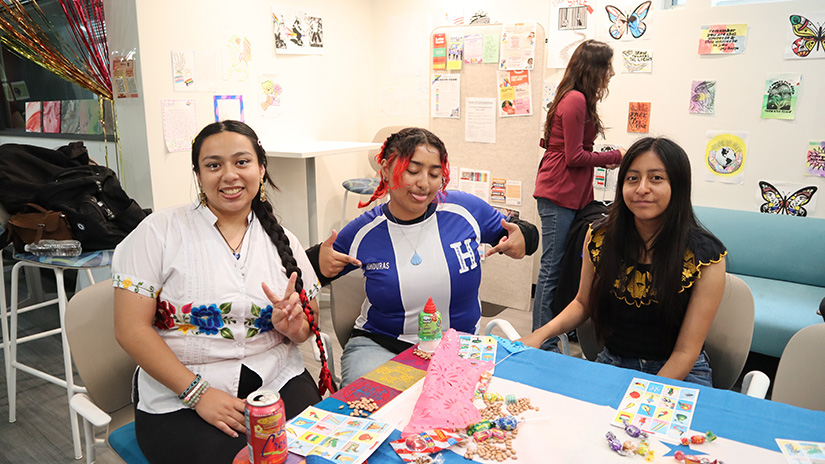
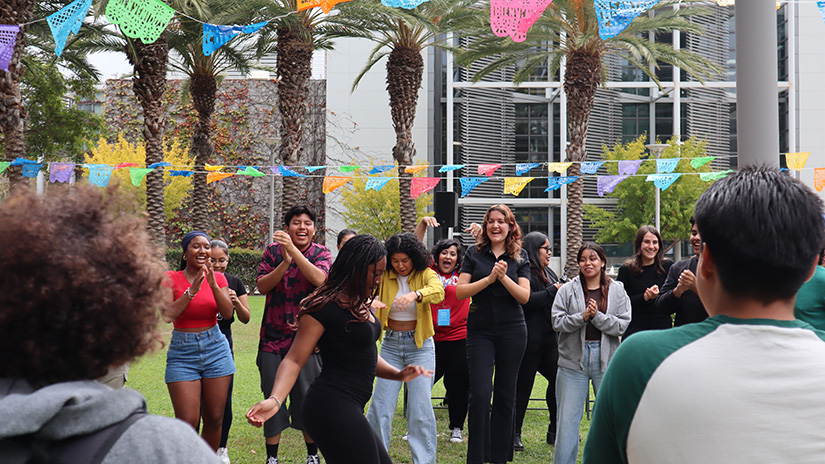
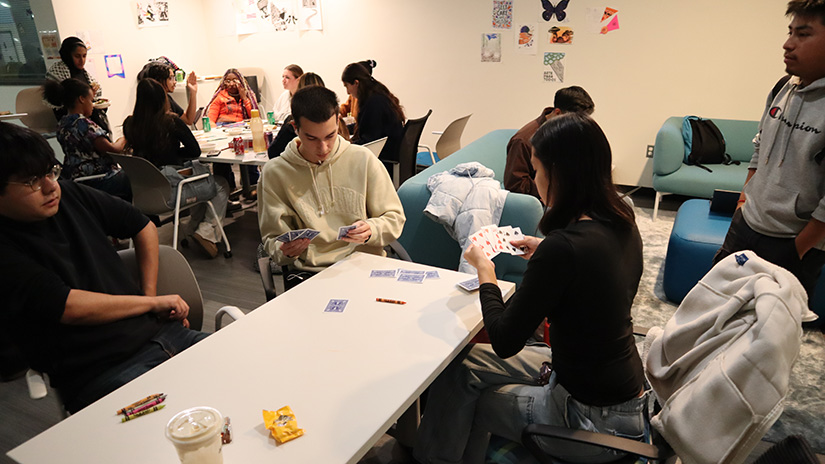
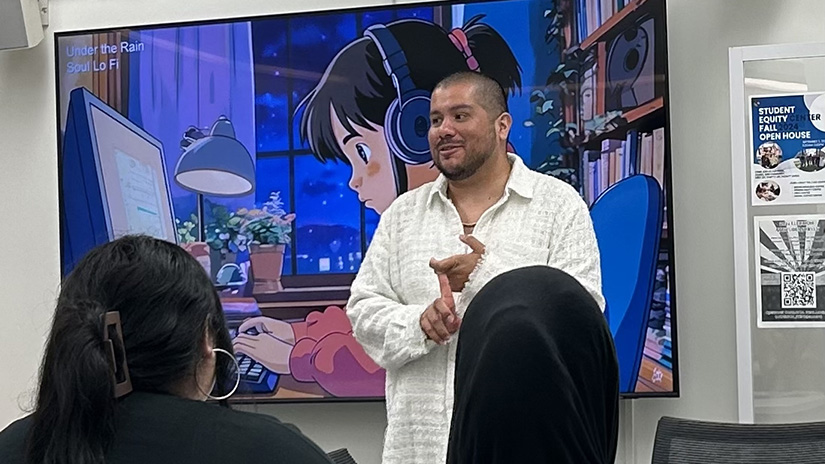
Sept. 2024 talk & art making workshop by artist Julio Salgado, event sponsored by Dream Resource Center

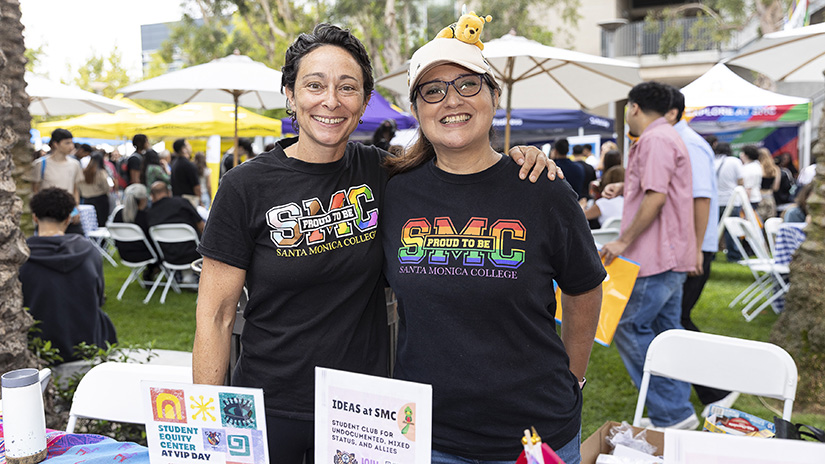
In just two years since an official opening, the Student Equity Center at Santa Monica College has become one of the most vital spaces at Santa Monica College — a welcoming hub where students enjoy activities, community and support during challenging times.
What began as a vision shared by faculty, staff and students is now a thriving 5,000-square-foot campus center that brings together four subcenters overseen by faculty: the Pride Center; the Dream Resource Center, with faculty lead Marisol Moreno; Gender Equity Center, with faculty lead Shannon Herbert; and the Racial Justice Center, with faculty lead Trisden Shaw. Together, they promote dialogue, honor intersectional identities and empower students.
Associate Dean of Student Life Thomas Bui shared that even before SMC identified a physical location, faculty, staff, students and administrators were imagining a unified space where students could explore themselves through counseling and learn from each other.
Labor of Love
“Our Student Equity Center is a labor of love,” Thomas says. “So many people came together to imagine what it could be. And it’s really the work of a community that made it possible.” For example, to name one such individual, Dr. Yamissette Westerband—SMC’s first full-time professor of Women’s, Gender and Sexuality Studies—played a pivotal role in co-creating and launching the Pride Center.
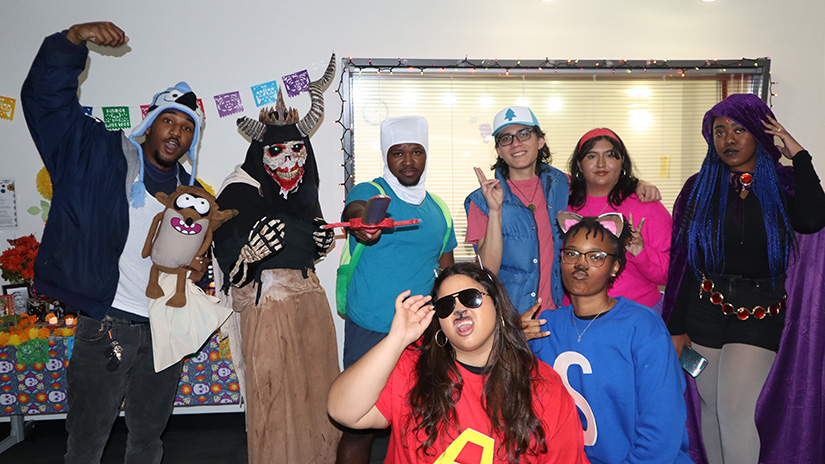
Today, the Student Equity Center hosts more than 70 programs each semester, ranging from social justice workshops to cultural heritage events, student-led gatherings, activism training and community-building conversations. The Center actively collaborates with other college stakeholders and programs such the DREAM Program, Black Collegians-Umoja Community, Latino Center/Adelante, EOPS/CARE, Community & Academic Relations/SMC Associates, the Center for Wellness and Wellbeing, and various student clubs in its student programming. Its professional staff — including Project Manager Valeria Garcia and Student Services Specialist Emily Chavez — help coordinate an ever-expanding calendar driven by student feedback.
“We want students to feel empowered to create spaces for each other,” Valeria says. “Students know what students need. Our role is to support the ideas they bring to us.”
“It’s always the students,” Emily adds. “We want them to learn about their identities, connect with resources and feel that they can be their authentic selves here.”
Positive Vibes
Animation major Ray Luna first walked into the center as a first-year student at SMC, shortly after graduating from Fairfax High School in Los Angeles, hoping for a quiet place to study but finding so much more.
“I really liked the vibe,” Ray says. “I got lucky that I found the Equity Center in my first year, because I was able to establish long-lasting friendships.”
As a first-generation college student of immigrant parents, Ray was carrying not just academic hopes but also stress. The center offered a place to breathe — and get involved. Ray joined in meetings of the Gender and Sexuality Alliance held there, then began taking part in Tea Time, a weekly hangout for trans and nonbinary students. Eventually, Ray started running it.
“Tea Time is mostly nerd talk and a chance for people to relax,” Ray says with a smile. “But we also create events with purpose. One was a group discussion where students could share their feelings about what’s going on in the country — which helped me a lot, too.”
Ray now works at the Student Equity Center, helping manage social media, creating flyers, organizing events and ensuring the space is welcoming. “A lot of first-year students come in now,” Ray notes. “It means they feel safe and accepted. That’s the most important part.”
Ray is also quick to note that the center’s student staff — currently four, soon to expand — bring the same commitment. “We’re students also,” Ray says. “We know what it’s like. We want people to feel that this place is for them.”
Safe Haven
In today’s fraught political climate, places like the Student Equity Center fill an urgent need. Staff are acutely aware of how national policies and news events — whether immigration enforcement activity, political rhetoric targeting LGBTQ+ communities or conversations on race — affect students directly.
“Our colleges are microcosms of society,” Thomas observes. “Every time something happens in the world, we know it’s going to impact our students.” So, the first priority is always to make sure they feel supported and have a safe space to process what’s happening.
For example, when federal immigration raids increased in Los Angeles, the center responded quickly, collaborating with the DREAM Program and the college’s Federal Action Impact Analysis Team to mobilize resources, distribute accurate legal information, bring in legal resources, and create a space for undocumented students and students from mixed-status families. When LGBTQ+ or trans rights are under attack, the Pride Center similarly creates events and spaces to help students feel seen and protected.
Yet there’s also plenty of time for fun. Student staff have organized karaoke afternoons, film screenings, first-gen celebrations, boundary-setting workshops and self-defense training. “We want students to learn about themselves, but also to find laughter,” Valeria says. “That’s part of healing.”
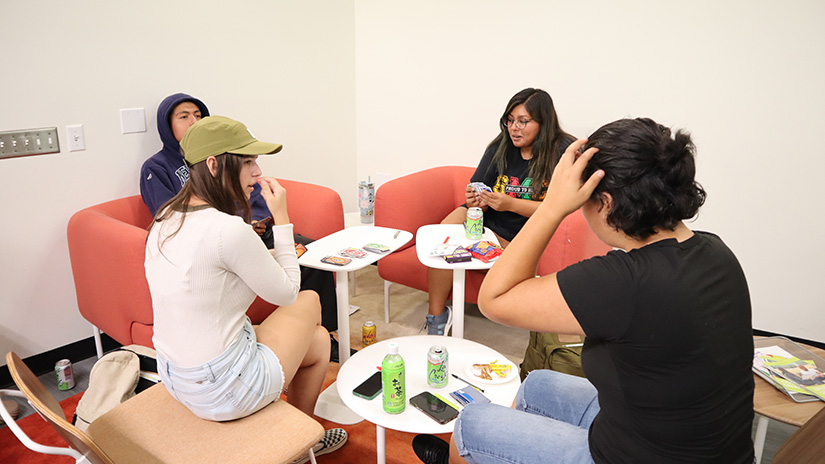
Students use the space for everything from meditation to studying to resting between classes. There’s a reading room, a workshop room, a room for club meetings, and a prayer and meditation space that sees daily use. Some students stay for hours; others drop in for a moment of quiet or conversation.
“It becomes whatever students need it to be,” Emily says. “Some days are lively, others are calm. But students know they can come here and be themselves.”
Growing Together
Demand for the center has grown dramatically as more students return to campus for in-person classes. Staff see rising attendance at events, deeper engagement among first-year students and a growing awareness of the center’s mission. But they’re still working on getting the word out.
“Once students find us, though, they keep coming back,” Valeria says
Much of the growth reflects students’ intersecting identities. Many students connect with multiple subcenters at once — undocumented and LGBTQ+, gender nonconforming and from racially minoritized backgrounds. The team works intentionally to honor these layered experiences.
“We’re building a foundation where all identities can be talked about together,” Emily notes.
Looking ahead, the faculty, staff and students devoted to the center hope for continued growth, more resources and eventually a larger dedicated space. But even more than that, they want the center to remain a place where students feel entirely free to be themselves.
“I hope students can let their guards down and know they are safe,” Valeria says. “That they never have to question whether they belong.”
Thomas believes the center’s greatest impact happens even outside its walls — when students who meet there begin forming friendships, supporting each other and creating community across campus.
“If students feel connected, then we’ve done our work,” Thomas says. “The Student Equity Center exists because students wanted it, advocated for it and shaped what it has become. Without them, none of this would exist.”
Echoing classmates, Ray adds: “Now is the best time to show up for each other. Community is more important than ever.”
* * *
SMC in Focus Volume XI, Issue 6
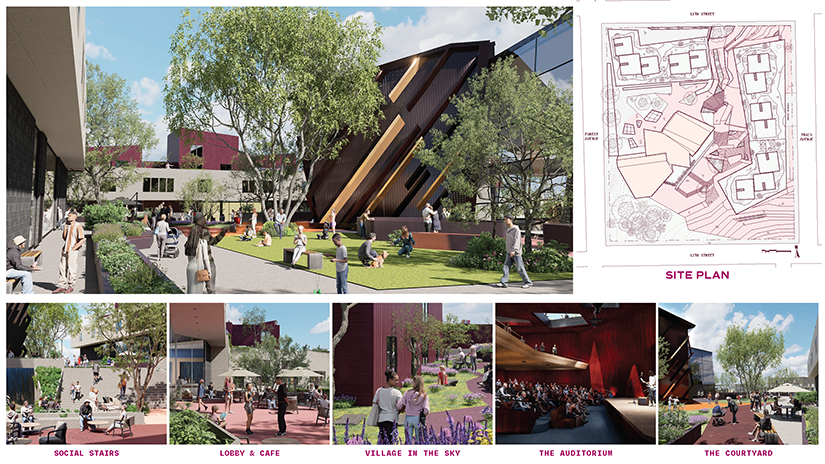
Jazz Building Blocks
A team of SMC architecture and interior architectural design majors recently earned national recognition with a design inspired by Kansas City’s deep roots in jazz and blues. Read Article
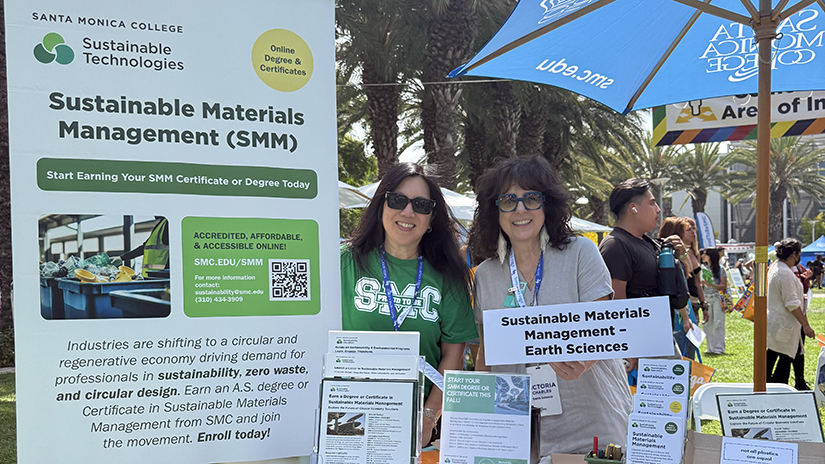
Toward Zero
Santa Monica College’s award-winning Sustainable Materials Management program turns zero waste principles into healthier surroundings — and successful careers. Read Article
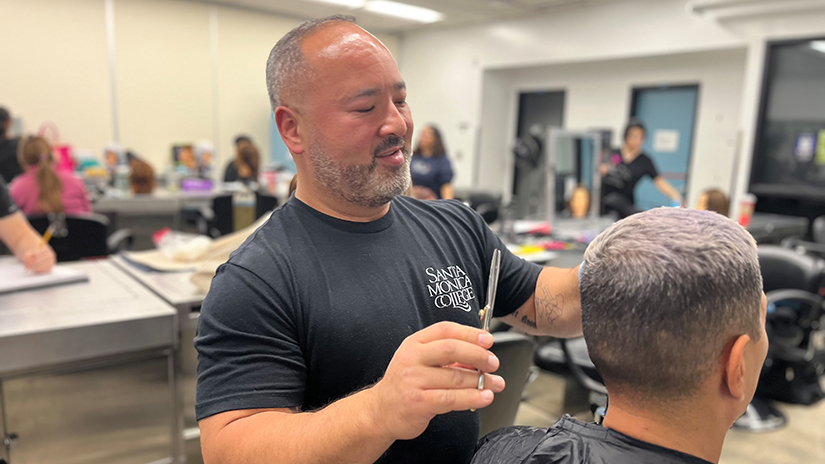
From WongCo to WongCuts
An IT staffer is preparing for life’s next chapter—and fulfilling a long-buried aspiration—as a student in SMC’s nascent Barbering Program. Read Article
Sense of Belonging
SMC’s Student Equity Center builds community, supports identity and creates space for students to grow, lead and take pride in who they are. Read Article
Bragging Rights
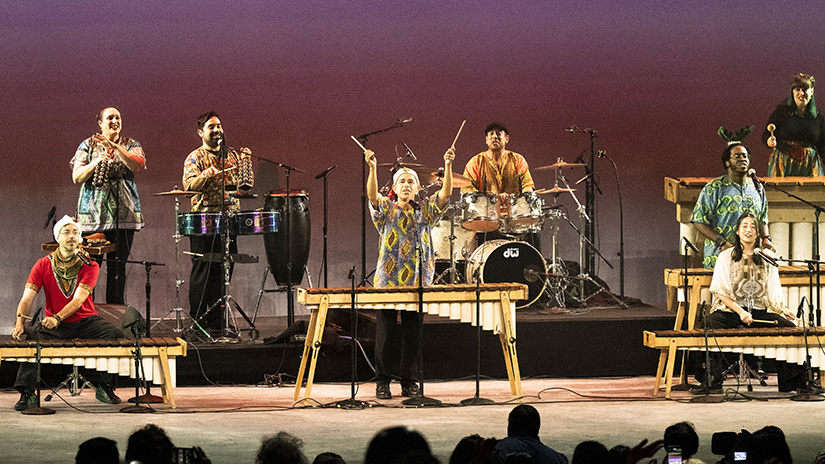
Black Collegians Umoja wins two statewide awards. SMC accounting alum garner scholarships. A Music instructor performs at Harvest Moon Gathering. Read Article
A Hub for Discovery
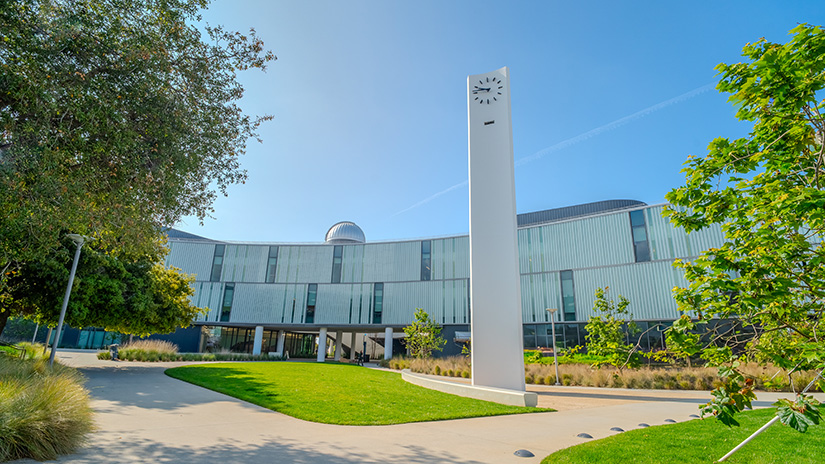
SMC’s new Math & Science Building brings together four academic departments and a world-class planetarium + observatory, offering new opportunities for discovery and exploration. Read Article