

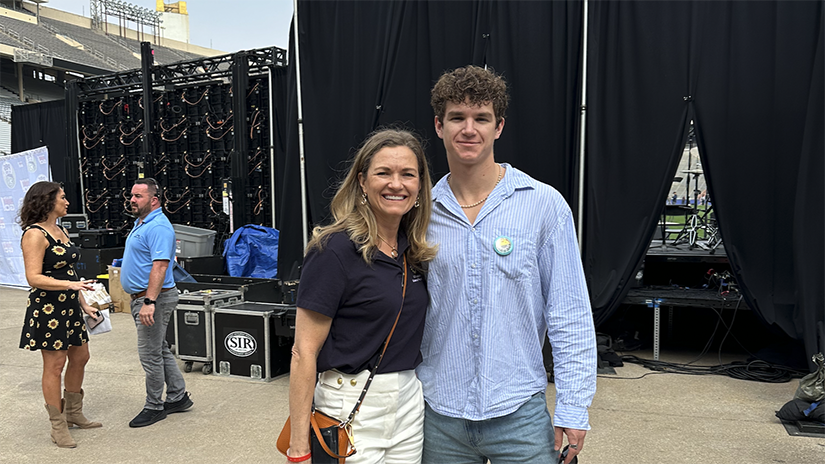
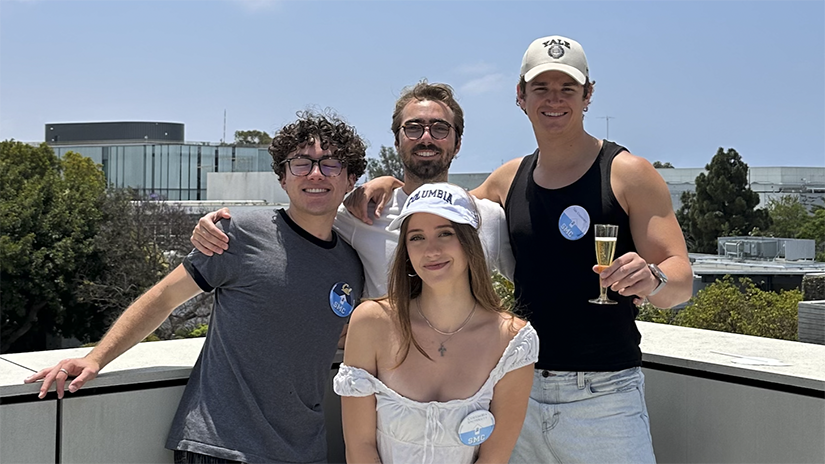


Early entrepreneurial success left Magnus Melbourne unfulfilled, so he turned to Santa Monica College for an educational jumpstart that would ultimately lead him to Yale University.
“I always intended to go to college,” says Magnus, whose parents met as students at Caltech before moving to Ellensburg, Washington, to become professors at Central Washington University. “I’m very curious by nature—I think having scientists as parents inspired that,” Magnus adds. “But I got distracted in high school by sports and partying.” He admits that “school was just not important to me then—even though I’ve always loved learning.”
His paternal grandparents had both attended community college before transferring to UCLA and Caltech, so Magnus’ dad suggested that as a route he could take later to get back on track academically. “He probably told me that a little too early because I pretty quickly decided that’s what I would do,” Magnus recalls.
But after graduating high school in 2017, Magnus opted to gain further education through travel instead.
Seismic Notions
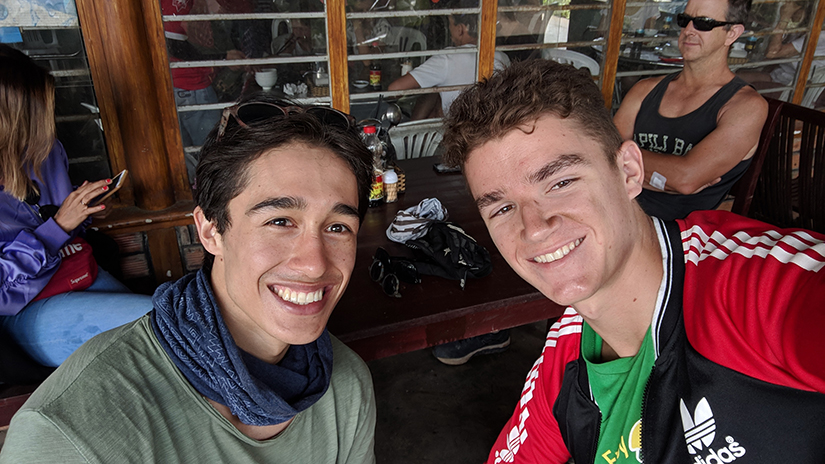
Freshly turned 18, and having saved some money, he backpacked across Europe before reaching Morocco. There, a chance encounter with a fellow traveler sparked an idea. Both were searching for meaning—and for something to build.
The result was Seismos, an early-warning earthquake app that crowdsourced information from smartphone sensors. “Traditional seismometers are expensive,” explains Magnus, who had been inspired by a paper on the subject. “But if you can network enough smartphones, they can work together to detect earthquakes—and warn people in harm’s way before the shaking starts.”
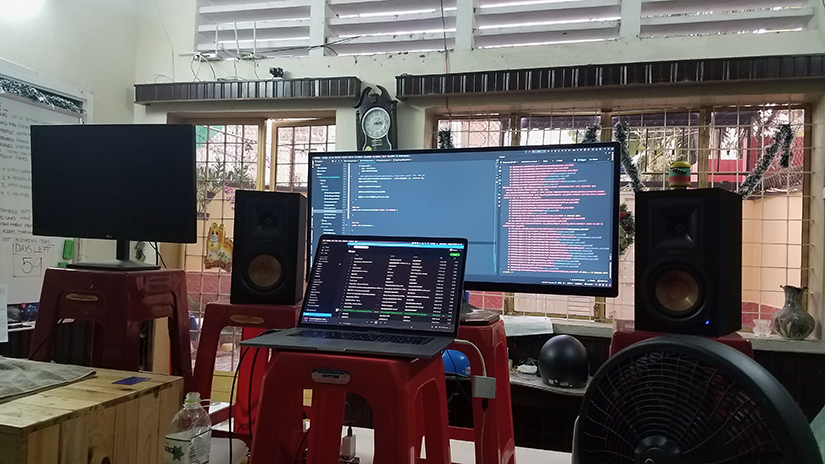
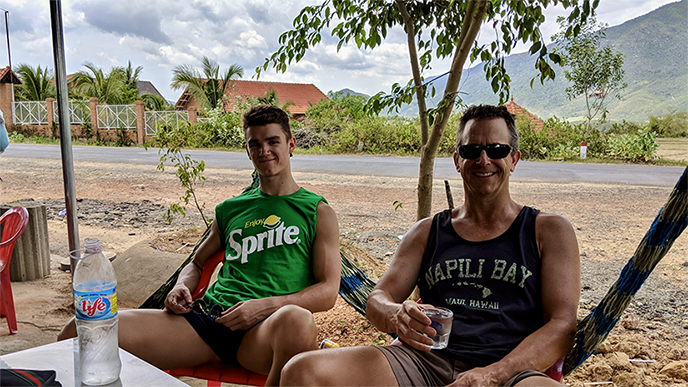
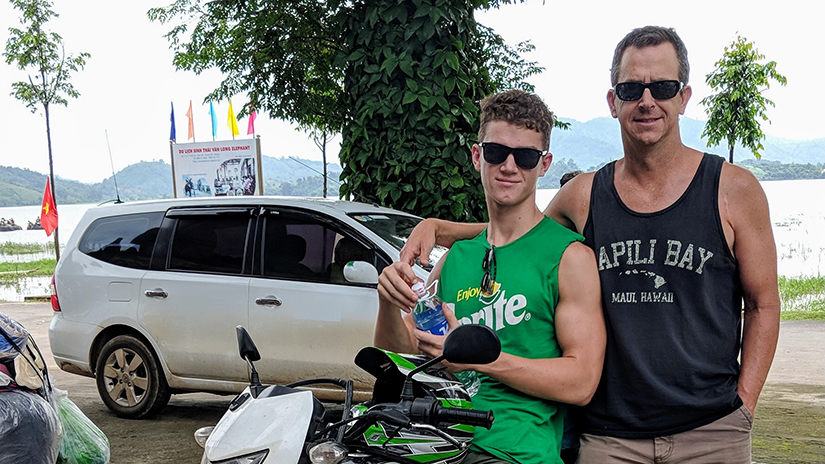
The two co-founders moved to Vietnam and worked obsessively. “We’d eat, work out and then code all day,” Magnus recalls. The venture raised some funding and built a functional app, but user retention proved challenging. Still, it fueled his longstanding interest in entrepreneurship and fed his drive to solve urgent problems.
Magnus’ time overseas also spurred an app enabling Americans living abroad to maintain U.S. addresses for receiving physical mail. Third-party recipients would take in the items and scan them for clients. But while the app was profitable, it failed to fulfill his passions.
“I turned 23 and realized I wanted more than just to build things—I wanted to understand the world more deeply,” he says. “And that meant I needed the grounding that college gives you.”
Finding Community
After trying another college, he transferred to SMC, drawn by its academic reputation, transfer success rate, flexible enrollment—and, he admits with a smile, its proximity to the beach.
“SMC was exactly what I needed,” he says. “It all felt very uplifting and inspiring. There’s this special community there. I met amazing people—international students, fellow math nerds, plus inspiring and supportive professors.” He also met his girlfriend, Paige, a fellow math major.
Two professors in particular—Physics Professor Emin Menachekanian and Mathematics Professor Gerald Kamin—stood out, both writing recommendations that helped propel Magnus into Yale’s Eli Whitney Students Program, a competitive track for nontraditional students. “They believed in me,” he says of the SMC professors. “That meant a lot.”
Along with academic preparation, SMC gave Magnus a renewed sense of national pride. In Germany, where his mom is from and where Magnus completed part of his elementary school education, “they place kids into vocational or college tracks by fourth grade,” he observes. “But in the U.S., you can screw up in high school, take time to figure things out and still end up at Yale. That’s incredible.”
SMC offered financial advantages as well. Between Pell Grants and state programs, Magnus not only attended without debt—he received nearly $4,000 in support each semester. “It was unbelievable,” he says. “A beautiful school, amazing teachers, free tuition—and cash in my pocket to study math? That’s the American dream.”
Journeys to Come
At Yale, Magnus plans to major in math and computer science, with a possible additional major in philosophy. “I’m interested in everything—philosophy, politics, AI and history,” he says. “Yale is the perfect place to explore it all.”
He’s especially fascinated by blending disciplines. “In the future, the most impactful people will be those who can connect fields—people who understand technology but can also think across domains of knowledge to build new solutions,” Magnus notes.
His outlook reflects lessons learned from his two startups. The first was ambitious but ultimately unsustainable, the second profitable yet unfulfilling. Still, “the contrast between them is what got me into Yale,” Magnus explains. “I realized I want to do work that’s both intellectually interesting and genuinely helps people.”
As he prepares to continue his education cross-country—his girlfriend will be just 90 minutes away at Columbia University—Magnus reflects on the community enabling this next stage in his journey. “SMC is incredible,” he says, observing that “of the 20 or so transfer students in my Yale program, three came from Santa Monica College. That says everything.”
He also hopes to give back, saying, “when I have the means to support the college, I will.”
From a self-described high school “screw-up” to a Yale scholar and beyond, Magnus embodies the spirit of possibility. “I got this spirit of entrepreneurialism and belief in a better future from my dad,” he says. “And SMC allowed me to start making that dream real.”
* * *
SMC in Focus Volume XI, Issue 4
Caregiver to Changemaker
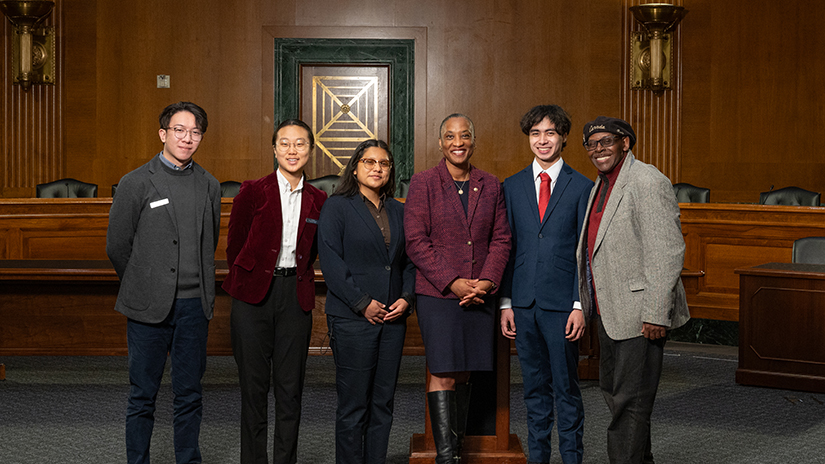
Santa Monica College enabled David Duncan to get back on track, channeling his compassion into public policy and community impact—and earning a transfer to Stanford. Read Article
Reading “College Chemistry” in Tehran
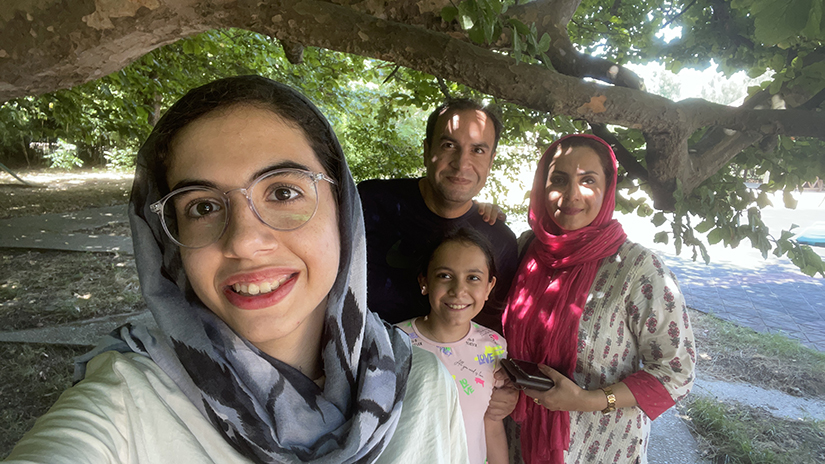
As she packs her bags for Palo Alto, Ghazal Azhdari still can’t get over how many SMC people went out on a limb to help a newly arrived immigrant succeed beyond her wildest dreams. Read Article
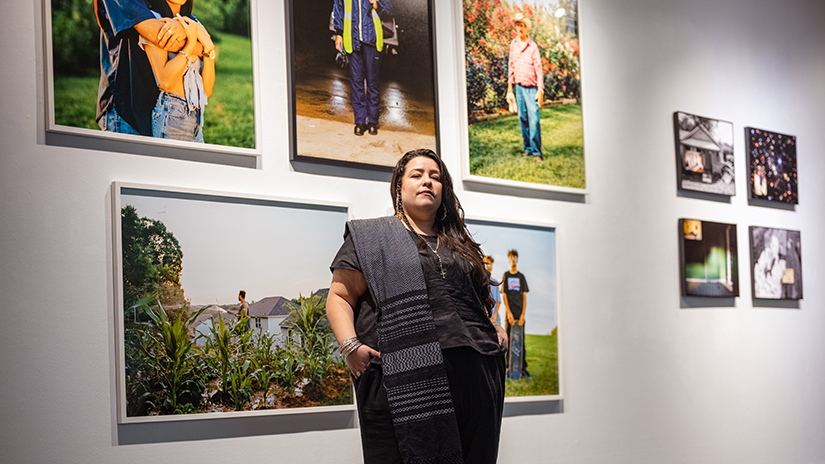
A Lens-Based Celebration of Latinidad
A timely, major exhibition “Concrete Hope”, curated by Erika Hirugami, is coming to SMC’s Barrett Art Gallery, shining a spotlight on 38 Latine/x photographers and artists. Read Article

The Singing Congressman
From Broadway musicals to campaign hustings, Brayden Handwerger’s search for the spotlight changed dramatically over his three years at SMC. Read Article

Bragging Rights
An SMC Fashion alum to produce a look for Jayne Kennedy. A first-ever Barber Battle at SMC. Studying abroad in Paris. A “Systems Changer” Award for the college. Read Article
Startup Scholar
Youthful entrepreneur Magnus Melbourne found a launching pad to the Ivy League at Santa Monica College. Read Article